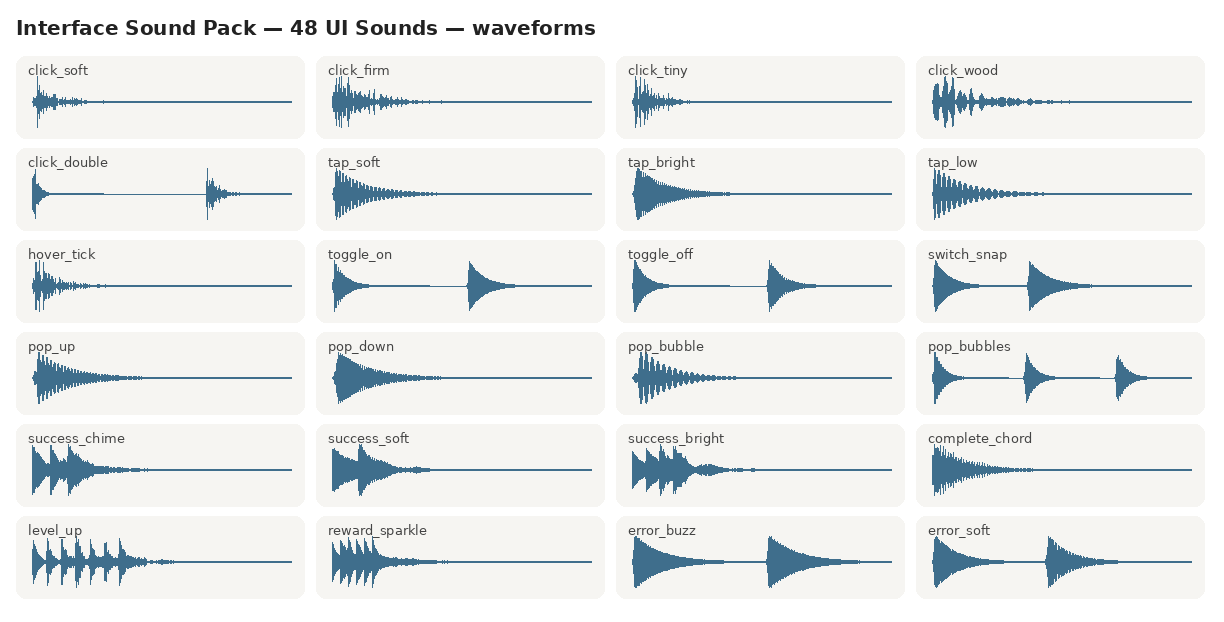
Interface Sound Pack — 48 UI Sounds
Sound packClicks, taps, toggles, confirmations, alerts and transitions for apps, games and prototypes. Royalty-free for commercial use.
What "royalty-free" actually means, how it differs from public domain and Creative Commons, what you can usually ship in an app, game or video, and the clauses worth checking before you buy. General information, not legal advice.
"Royalty-free" is one of the most misunderstood phrases in audio. It doesn't mean free of charge, and it doesn't mean free of copyright. This guide explains the common license types in plain English so you know what to look for. It's general information, not legal advice; for anything high-stakes, read the actual license text and, if needed, ask a lawyer.
A royalty is a payment you make every time something is used or sold. Royalty-free means you pay once (or get it free) and then don't owe further payments per use, per copy sold or per view. The creator still owns the copyright; you are getting permission to use the sounds under the license's conditions.
| License type | Pay per use? | Credit required? | Commercial use? | Typical catch |
|---|---|---|---|---|
| Royalty-free (commercial) | No | Usually no | Usually yes | You can't resell the raw files |
| Public domain / CC0 | No | No | Yes | Make sure the uploader actually had the right to release it |
| Creative Commons BY | No | Yes | Yes | You must credit the author as the license specifies |
| Creative Commons BY-NC | No | Yes | No | No commercial use at all |
| Rights-managed | Often yes | Varies | Per agreement | Priced per project, territory or duration |
Most commercial royalty-free licenses let you put the sounds inside something you make: an app, a game, a website, a video, a podcast or an advert, and sell or monetize that thing. You can usually edit them too: trim, pitch, layer or add effects.
Save the receipt and a copy of the license text with your project files. If a platform ever questions your use of a sound, the receipt plus the license is what you'll need. A simple text file in your project, listing where each sound came from, takes two minutes and saves hours later.
If you need a sound that evokes a famous one (a console startup chime, a game's coin sound), don't use a recording or a near-identical copy. Recognizable brand sounds can be protected by copyright and in some cases trademark. Original sounds in a similar style are the safer route.
Clicks, taps, toggles, confirmations, alerts and transitions for apps, games and prototypes. Royalty-free for commercial use.
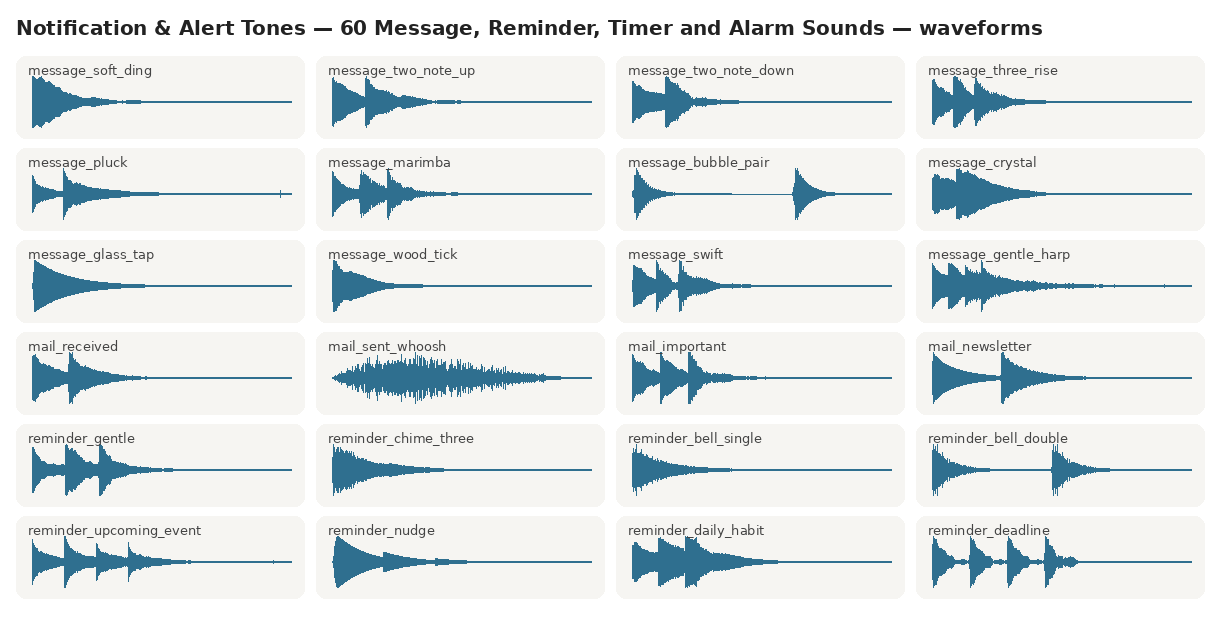
Ready-to-ship tones for messages, email, reminders, timers, alarms, warnings and status events. Royalty-free for commercial use.
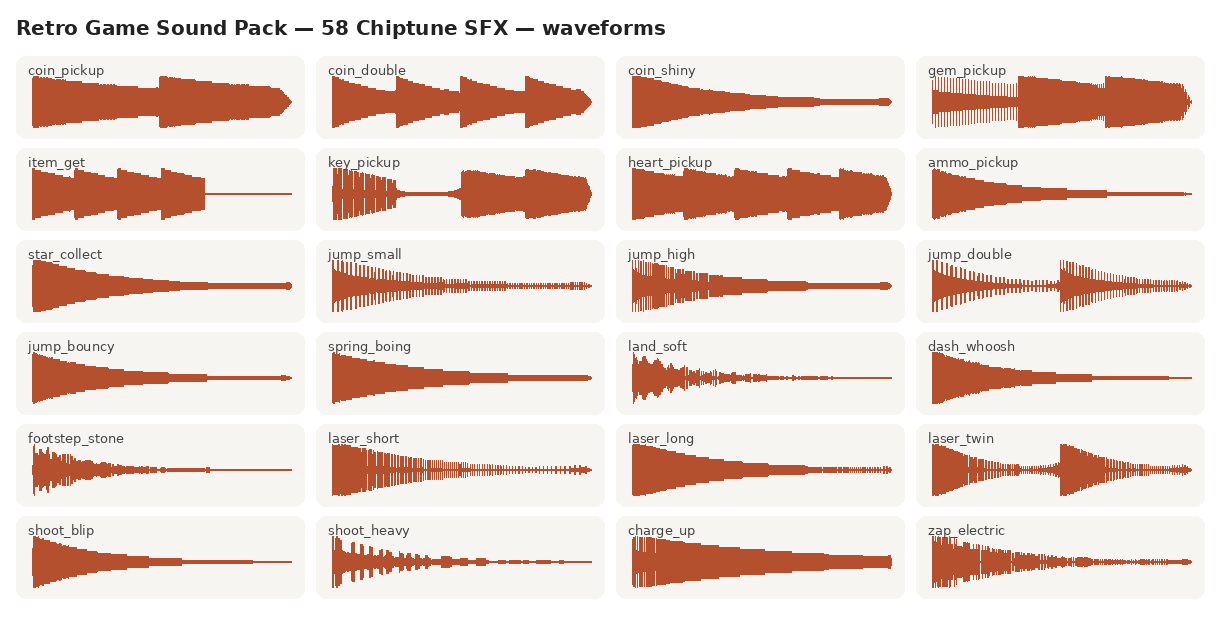
Coins, jumps, lasers, hits, explosions, power-ups, menu blips and short jingles in an 8-bit style. Royalty-free for commercial use.
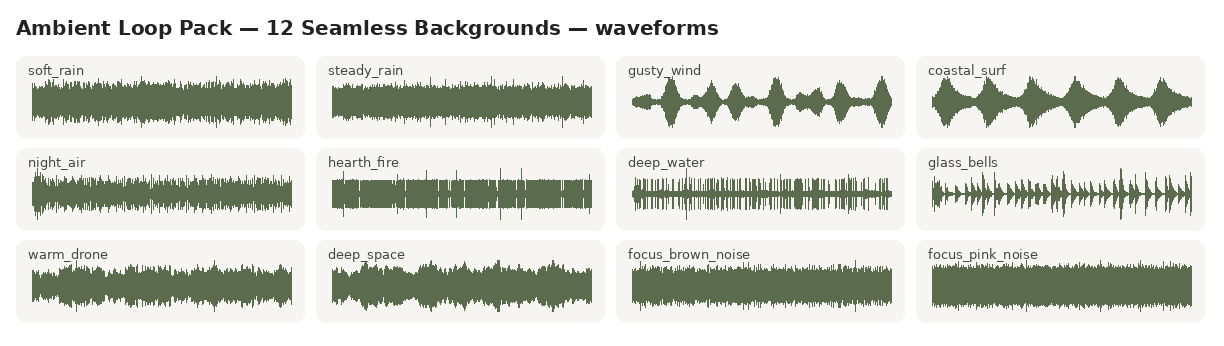
Rain, wind, surf, night air, fire, drones and soft bells: 60-second stereo loops that repeat without a seam.
Sold by Quietcog. Support: gb1@mail.grokbot.com. General information only, not professional advice.