The Household Budget Tracker
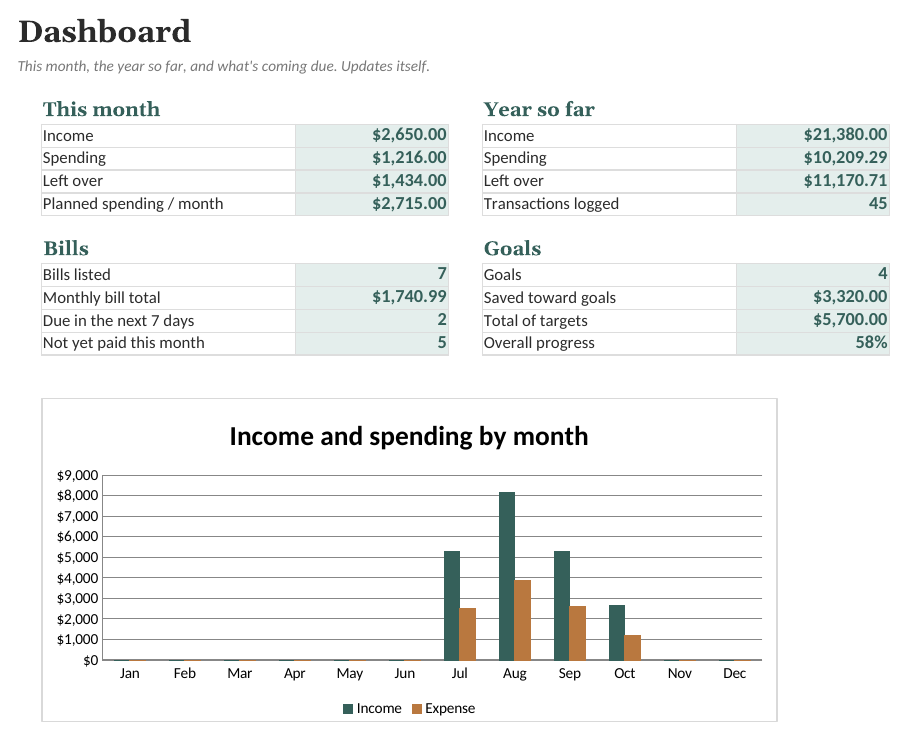
Spreadsheet kitYour categories, your plan: log spending and income, and see every month, bills coming due, and savings goals.
How to list the costs that don't arrive every month (car, insurance, holidays, gifts, home repairs), turn them into a monthly set-aside, and track them in a spreadsheet. General information, not financial advice.
Many budgets work fine for rent, groceries and subscriptions, then fall apart in the months with a car registration, an insurance renewal, a broken water heater or the holidays. Those costs aren't really surprises: you know they're coming, just not every month. A sinking fund is a simple way to plan for them. This is general information about organizing your own money, not financial advice.
A sinking fund is money you set aside a little at a time for a specific, expected cost. Instead of paying $600 for something in December, you put aside $50 a month from January. When the bill arrives, the money is already there.
People keep sinking funds in different ways: a separate savings account, sub-accounts or "pots" if their bank offers them, or simply one savings account with a spreadsheet that tracks how much of the balance belongs to each purpose.
Go through last year's bank and card statements and note anything that didn't happen every month. Common ones:
For each item, estimate the yearly cost and divide by the number of months until it's due.
| Expense | Yearly estimate | Months until due | Set aside per month |
|---|---|---|---|
| Car insurance | $960 | 12 | $80 |
| Holiday gifts | $600 | 12 | $50 |
| Home repairs | $1,200 | 12 | $100 |
| Glasses | $240 | 6 | $40 |
| Total | $3,000 | $270 |
If the total is more than you can manage, that's useful to know in January rather than December. You can lower an estimate (a smaller gift budget), push a cost out (replace the laptop next year), or accept a partial fund.
Keep a small table with one row per fund: target, amount saved so far, and amount spent. Each month, add the set-aside to each fund. When you pay one of these costs, record it against its fund. The point is to know how much of your savings balance is already promised to something.
Estimates drift. Insurance renews higher, a repair costs less than expected. Every few months, compare each fund to its target and adjust the monthly amount.
Your categories, your plan: log spending and income, and see every month, bills coming due, and savings goals.
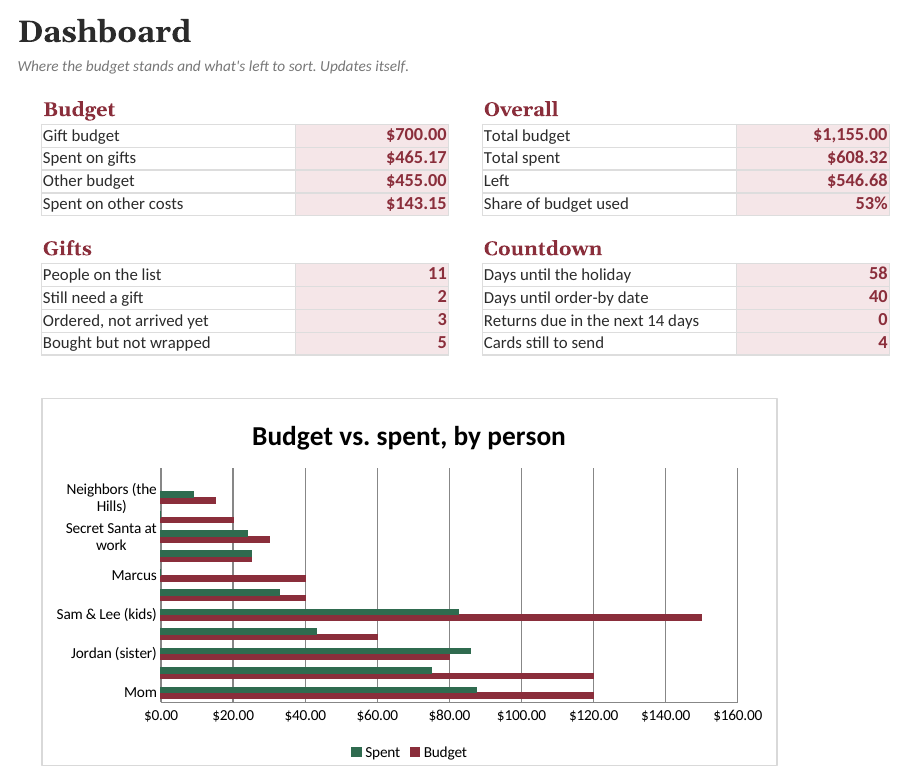
Everyone on your list, a budget per person, every gift from idea to wrapped, plus the other holiday costs and your card list, all in one spreadsheet.
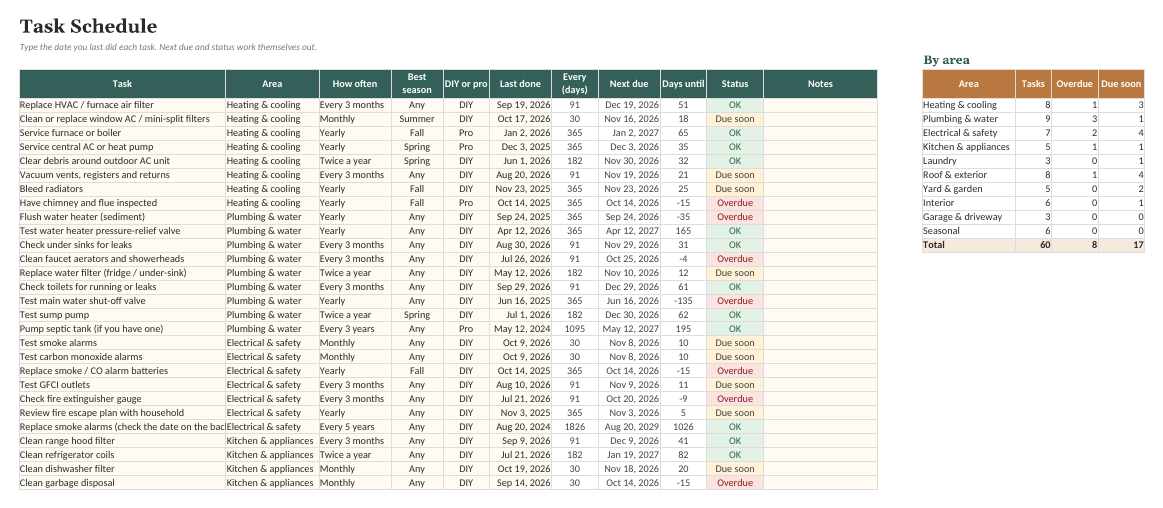
A rolling home-maintenance schedule that knows what's due, plus a service log, a contractor list and the key facts about your house in one place.
Sold by Quietcog. Support: gb1@mail.grokbot.com. General information only, not professional advice.